
On Jan. 13, a large group of the Dungarvin Oregon team traveled to the Oregon State Capitol, joining disability service providers from across the state and our partners at the Oregon Resource Association. Together, we advocated against LC 38, a bill that would create a new Home and Community-Based Services (HCBS) Workforce Standards Board with broad authority over wages, benefits, training, and working conditions in Oregon’s disability services system.
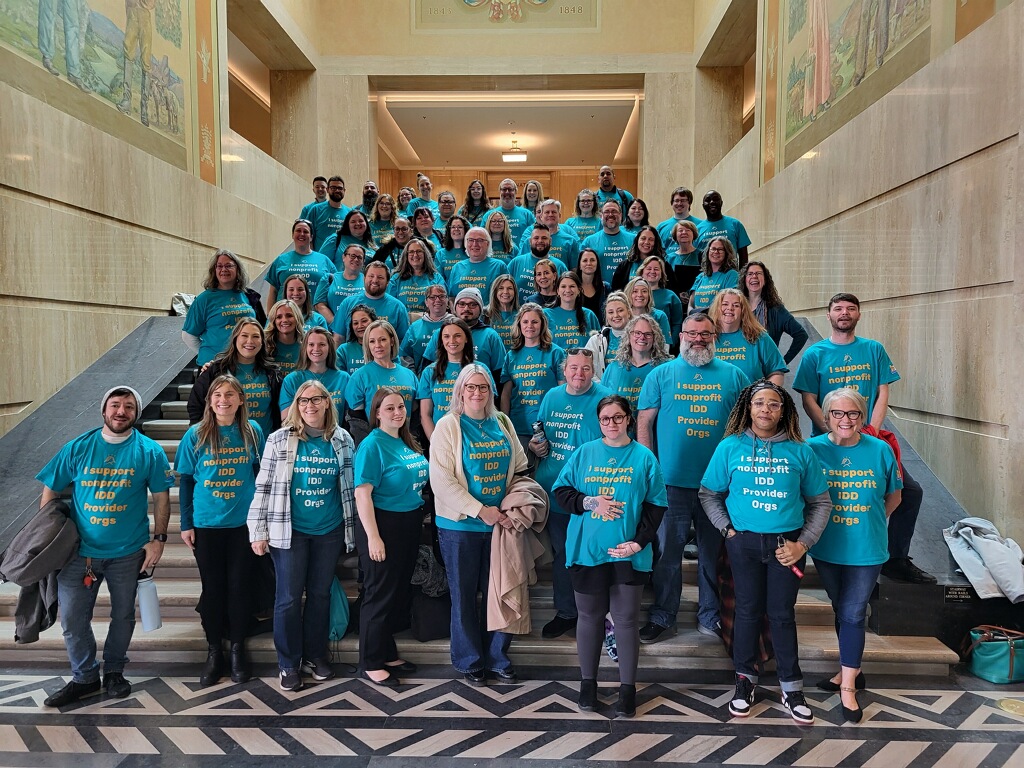
Our presence at the Capitol reflects a long-standing concern shared by many providers, families, and advocates: while we all agree that Oregon must do more to stabilize and support the Direct Support Professional (DSP) workforce, LC 38 is not the right solution.
How We Got Here: From HB 3838 to LC 38
LC 38 did not emerge in a vacuum. During the 2025 legislative session, a nearly identical proposal was introduced as HB 3838. That bill generated significant concern across the intellectual and developmental disabilities (IDD) community and ultimately did not advance during the session.

At that time, Dungarvin Oregon submitted both written and verbal testimony outlining serious concerns with the proposal, including its failure to reflect the realities of person-centered, community-based services and its creation of an additional layer of state bureaucracy without guaranteed funding. Those same core issues remain embedded in LC 38, despite changes in bill number and session timing.
Why Providers Are Concerned
Oregon’s IDD services are fundamentally different from institutional or medical models of care. DSPs support people in their own homes and communities, with schedules, staffing patterns, and daily activities driven by individual choice. LC 38 proposes a centralized, statewide workforce standards board that risks applying one-size-fits-all rules to a system built on flexibility and self-determination.
Providers are also deeply concerned about the creation of a new regulatory body in an already highly regulated environment. Disability service providers are currently overseen by multiple state and federal entities. Adding another board with enforcement authority increases complexity, administrative burden, and cost—without directly improving services or wages.

Most critically, LC 38 does not guarantee funding for any new standards it may eventually establish. Because IDD services are almost entirely Medicaid-funded, providers cannot absorb unfunded mandates. When costs rise without corresponding rate increases, the result is fewer providers, reduced services, and diminished access for people with disabilities.
A Shared Goal, Different Path
Our opposition to LC 38 should not be mistaken for opposition to DSP wage increases or workforce investments. In fact, providers have been consistent and vocal in calling for direct funding increases, competitive wages, and sustainable benefits for DSPs. These investments are essential to workforce stability and service quality.
What we continue to advocate for is a solution that:
- Directly funds wages and benefits
- Preserves flexibility and person-centered care
- Reduces, not adds to, regulatory burden
- Strengthens access to services across all of Oregon
Showing Up for the People We Support
By joining other providers and ORA at the Capitol, the Dungarvin Oregon team showed up not just for our organization, but for the individuals and families who rely on community-based disability services every day. Advocacy is part of our responsibility as providers—and our voices matter when policies risk reshaping the system in ways that could unintentionally cause harm.
We remain committed to working collaboratively with legislators, advocates, and partners to find solutions that truly strengthen Oregon’s disability services system—by investing in people, not bureaucracy.